
Inpatient treatment is a powerful reset. You step away from the noise, the triggers, and the day-to-day pressures that kept you stuck. You get medically supported stabilization, structure, and real momentum.
Then discharge day comes, and a very human question shows up fast: Now what?
If you are feeling excited and nervous at the same time, that is normal. Early recovery is not about being perfect. It is about staying connected, protecting what you built, and continuing to grow. We like to say recovery is not just about stopping a behavior. It is about building strength, energy, and a life you actually want to wake up to.
Below is what typically happens after inpatient treatment ends, what to expect emotionally and practically, and how to set yourself up for the next right step.
The first days out can feel surprisingly intense
Many people imagine leaving inpatient care will feel like instant freedom. Sometimes it does. But it can also feel like sensory overload.
In residential treatment, your days are guided. Meals happen at set times. Support is close. Your environment is predictable. When you return home, you have to make choices again, constantly. What time you wake up, what you eat, who you see, where you go, what you do when stress spikes.
That flood of choice can be exhausting at first.
Common experiences in the first week or two include:
- Feeling emotionally “raw” or extra sensitive
- Sleep changes, vivid dreams, or restlessness
- Mood swings, irritability, or anxiety
- A strong craving for comfort, escape, or old routines
- Unexpected grief about what addiction took or what relationships changed
- A burst of confidence followed by a crash of doubt
None of this means you are failing. It means your nervous system is still recalibrating. Early recovery is an active process, and your brain and body are learning new rhythms.
To ease this transition and avoid overwhelming stressors that may lead back to old habits, consider exploring flexible treatment options such as these. These plans can help accommodate your individual needs during this critical phase of recovery.
Whether it’s alcohol, heroin, or any other form of addiction you’re dealing with, remember that you’re not alone in this journey. There are resources available that offer addiction treatment tailored specifically for your situation in Santa Ana.
Just as in running or walking where sometimes less is more, early recovery isn’t about rushing into everything at once but rather taking it one step at a time while focusing on building a healthier lifestyle.
Your discharge plan becomes your daily blueprint
A good inpatient treatment program does not end with a handshake and a “good luck.” It ends with a plan. That plan is not just paperwork. It is protection.
After inpatient treatment, most people transition into a level of care that fits their clinical needs, home environment, work responsibilities, and relapse risk. Your plan often includes:
- Ongoing therapy (individual, group, or both)
- Medication management if needed
- A recovery support community (12 step, SMART Recovery, Refuge Recovery, or other peer groups)
- Sober living or a structured home plan
- Family involvement and boundaries
- A schedule for sleep, food, movement, and stress management
- A relapse prevention plan with specific triggers and responses
We encourage you to treat your discharge plan like training wheels. You do not need them forever, but you absolutely want them while you are rebuilding balance.
Most people step down, not straight out
A common misunderstanding is that inpatient treatment is “the whole thing.” In reality, inpatient treatment is often the beginning of a longer continuum.
Stepping down might look like:
Partial Hospitalization Program (PHP)
This is a high level of support without living onsite. You spend much of the day in programming and return home or to sober living in the evening. PHP can be a strong bridge if you need structure while re-entering real life.
Intensive Outpatient Program (IOP)
IOP usually includes multiple therapy sessions per week, often in the evenings or mornings to support work and family responsibilities. This level helps you practice recovery skills in real time while still having consistent accountability.
In some cases, individuals may require more specialized care such as an opioid addiction treatment center or seek out holistic addiction treatment options. Understanding what a rehab center offers can also provide valuable insight into the recovery process.
Outpatient therapy and aftercare
This phase can include weekly therapy, group support, alumni meetings, and ongoing recovery coaching. For many individuals, this is where long-term growth really takes off.
Stepping down from intensive treatment is not a sign that you are “still broken.” Instead, it is how you protect the progress you’ve earned. It’s akin to physical rehab after a major injury; you wouldn’t go from surgery to running a marathon the next day.
Relationships change, and that can be both beautiful and hard
When you return home, you are not just rejoining your life but also your relationships. These relationships may still be carrying fear, resentment, or confusion. Loved ones might want to trust you but feel guarded or they may over-monitor you out of terror.
Simultaneously, you may be learning how to communicate without shutting down, exploding, or escaping. This stage often requires:
- Honest conversations about boundaries and expectations
- A willingness to repair without begging for immediate forgiveness
- Family therapy or structured support for loved ones
- Patience with the pace of trust rebuilding
We remind our clients that they do not have to navigate this journey alone. Recovery is built in connection. If home feels tense, isolating, or unsafe, structured support like sober living or a strong aftercare schedule can make all the difference.
Triggers show up fast, so we focus on preparation, not fear
A trigger is not just a craving; it can be a feeling, a place, a person, a payday, a holiday, a fight, boredom, loneliness, even success.
After inpatient treatment ends—especially for those who have gone through heroin addiction treatment—triggers tend to arrive in three categories. Understanding these triggers is crucial for effective holistic addiction treatment which addresses not just the physical aspects of addiction but also the emotional and psychological factors involved.
In some cases, individuals may also face challenges related to borderline personality disorder, which can complicate their recovery journey. Understanding such mental health issues is critical in the holistic approach towards addiction treatment, as it allows for addressing both the addiction and any underlying psychological conditions simultaneously.
Environmental triggers
Old routes, old stores, old hangouts, or even certain music and smells can trigger cravings.
Emotional triggers
Stress, shame, anxiety, anger, grief, or that “I can’t shut my brain off” feeling are common emotional triggers.
Social triggers
Friends who still use, family conflict, work culture, or parties can act as social triggers.
The goal is not to avoid the world forever. Instead, it’s about building a plan for what you will do when the world bumps into you.
A solid trigger plan answers:
- What are my top five triggers?
- What are my warning signs that I’m drifting?
- Who do I call first?
- Where do I go if I feel unsafe?
- What is my emergency routine for the next 60 minutes?
This is where we lean into a lifestyle-first approach. You do not just “white knuckle” a craving. You move your body. You breathe. You fuel yourself. You connect. You shift state, then you make decisions.
Your body is still recovering, and that matters more than people realize
Inpatient treatment helps stabilize you, but physical recovery continues for months. Sleep, hormones, digestion, energy levels, and mood can take time to regulate.
This is one reason why integrating RNFT (Recovery Nutrition Fitness Therapy) into recovery is crucial. When your body is depleted, your brain is more vulnerable to cravings and impulsive choices. When your body is strong and fueled, you have more resilience.
After inpatient treatment at an alcohol addiction treatment center, we encourage a few simple anchors:
- Eat consistently, even when appetite is low
- Hydrate, especially if sleep is disrupted
- Move daily, even if it is a walk and mobility work
- Keep caffeine and sugar swings in check
- Prioritize sleep as a recovery tool, not a luxury
We also love giving people a physical outlet that feels real, not clinical. Open gym access, structured fitness sessions, breathwork, and surf therapy are not “extras” to us. They are how many people learn to feel alive again without substances.
Mental health symptoms can rise as the fog clears
For many people, substances were not the only issue. They were also a coping strategy for anxiety, depression, trauma, or chronic stress. When you stop using, the original symptoms can become more noticeable.
This does not mean treatment “didn’t work.” It means you are finally in a position to treat the full picture.
After inpatient care, which might include holistic healing, you may continue care for co-occurring disorders through:
- Psychiatric support and medication management when appropriate
- Trauma-informed therapy modalities
- Skills-based therapies for emotional regulation and distress tolerance
- Support groups that normalize what you are experiencing
We are always watching for the difference between normal adjustment discomfort and symptoms that need immediate clinical attention. Either way, you are not supposed to power through alone. You are supposed to reach out.
Cravings can return even when motivation is high
A craving is not a character flaw. It is a brain signal that has been conditioned over time. Cravings can show up in surprising moments, including when things are going well.
It helps to know the common craving curve:
- Trigger hits (stress, memory, exposure)
- Thought appears (“One drink would calm me down.”)
- Body responds (tight chest, restlessness, tunnel vision)
- Urge builds (impulsivity increases)
- Peak passes (if you do not feed it)
Most cravings peak and pass within minutes, especially if you take action quickly.
Action can look like:
- Call someone in your recovery network
- Change location immediately
- Do breathwork for five minutes
- Eat something with protein and complex carbs
- Get to a meeting or a safe place
- Use your relapse prevention plan, step by step
We teach our clients to treat cravings like weather. You do not negotiate with a storm. You take shelter, use your tools, and let it pass.
It’s important to remember that these mental health symptoms and cravings often stem from underlying issues that may require professional intervention. In such cases, understanding the different types of mental health disorders can be beneficial in seeking appropriate help and treatment.
Community becomes your new foundation
Inpatient treatment gives you a head start. Community helps you keep it.
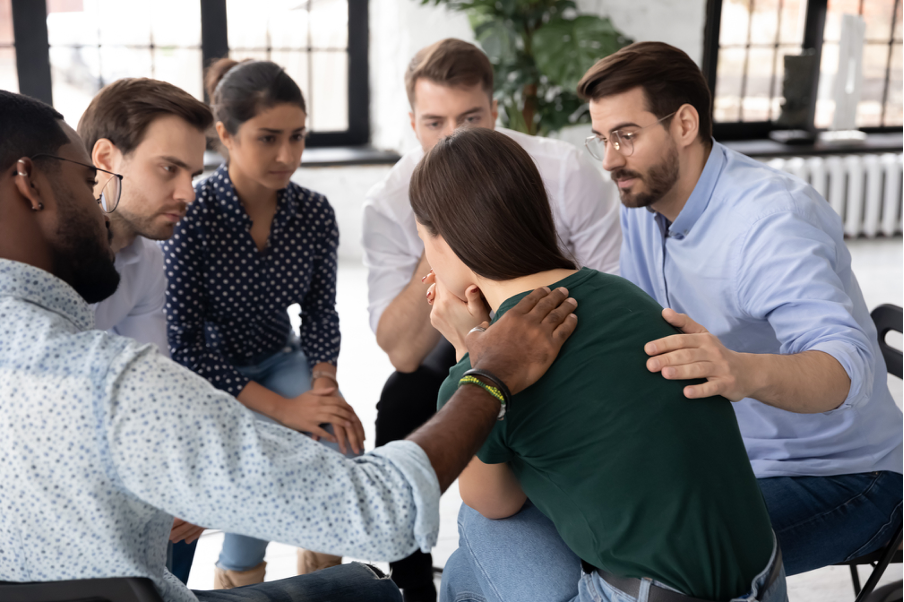
This is where the “family” part of recovery becomes real. You need people who tell you the truth, celebrate your wins, call you out with love, and remind you who you are when you forget.
Strong recovery community often includes:
- Peer support meetings and accountability partners
- Sober friendships and sober fun
- Alumni events and check-ins
- Mentorship or sponsorship
- Service work that creates purpose
If you are used to doing everything alone, this can feel uncomfortable at first. That discomfort is not danger. It is growth.
Connection fuels recovery. Isolation feeds relapse.
Work, school, and real-life responsibilities need a re-entry plan
Going back to work or school can be a major stressor. It can also be a major source of pride. The key is pacing.
A healthy re-entry plan might include:
- A clear daily schedule that protects recovery time
- Avoiding overcommitment in the first 60 to 90 days
- Saying no to unnecessary stress, travel, or high-risk events
- Planning for lunch breaks and end-of-day fatigue, when cravings can spike
- Building transitions into your day: gym, meeting, breathwork, walk, call
We also encourage people to remember this: productivity is not the same thing as recovery. Early on, your job is to stay well. Everything else gets built on top of that.
Sober living can be a game-changer for the right person
Not everyone needs sober living, but for many people it is the missing layer between treatment and independence. Substance use treatment in Santa Ana can provide them with the necessary tools to transition smoothly into sober living.
Sober living can provide:
- A substance-free environment
- Built-in accountability and routine
- Peer support in the home
- Separation from old triggers and unhealthy relationships
- A chance to practice life skills with structure
If your home environment is unstable, full of conflict, or surrounded by active use, sober living is not a punishment. It is a protective choice.
The goal shifts from “not using” to “building a lifestyle”
This is where we really distinguish ourselves. Recovery is not just avoiding a drink or drug. It is building a life that makes going back less and less appealing.
That lifestyle is made up of small daily choices that stack:
- Nutrition that stabilizes mood and energy
- Fitness that builds confidence and stress tolerance
- Breathwork that calms the nervous system
- Surf therapy and movement that reconnect you to joy
- Open gym access and consistent routines
- Real relationships that replace isolation
- Purpose, service, and goals that pull you forward
When you start feeling stronger in your body, you often start making clearer decisions in your mind. When you start feeling connected, you stop romanticizing the old life. That is not theory. That is lived recovery.
Warning signs to take seriously (and what to do next)
Sometimes relapse does not start with using. It starts with drifting.
Watch for signs like:
- Skipping meetings, therapy, or check-ins
- Isolating, lying, or minimizing
- Romanticizing “just one”
- Sudden mood swings or constant irritability
- Not sleeping, not eating, not moving
- Reconnecting with high-risk people or places
- Feeling like you “don’t need support anymore”
If you notice these signs, the move is not shame. The move is action.
Call someone. Tell on the thought. Get back into structure. Increase support for a season. You are not starting over. You are catching it early, which is what recovery strength looks like.
For those who find themselves needing more than just sober living or immediate support, considering an addiction treatment program in Santa Ana might be beneficial.
If you’re approaching discharge, here are a few questions to ask yourself
These questions can help you and your support team decide what comes next:
- Where will I live, and is it genuinely supportive of sobriety?
- What is my schedule for the next 30 days, hour by hour if needed?
- Who are my three people I can call anytime?
- What meetings or groups will I attend, and when?
- What are my top triggers, and what is my plan for each?
- What is my nutrition and fitness routine, even a simple one?
- How will I handle boredom, loneliness, and stress without substances?
- What is the plan if I feel at risk tonight?
If you do not have confident answers yet, that is okay. That just means you need more support and a clearer plan before you make the leap.
Let our family help yours take the next step
If you or someone you love is about to finish inpatient treatment at an alcohol addiction treatment center in Santa Ana, or you already have and feel unsure about what comes next, we are here. We combine medical safety with a lifestyle-first recovery model that brings the mind, body, and spirit back online through community connection, daily RNFT (Recovery Nutrition Fitness Therapy), breathwork, surf therapy, and open gym access.
You are not just a patient to us. You are family.
Call us today to connect with our team in Santa Ana for a confidential assessment, aftercare planning support, or to start your journey toward a healthier lifestyle. We offer a variety of programs including heroin addiction treatment and addiction treatment program. Let our family help yours.
FAQs (Frequently Asked Questions)
What should I expect emotionally and physically in the first days after inpatient addiction treatment?
In the initial days following inpatient treatment, it’s common to experience intense emotions and physical changes such as feeling emotionally ‘raw’ or sensitive, sleep disturbances including vivid dreams or restlessness, mood swings, irritability, anxiety, strong cravings for comfort or old routines, unexpected grief about past losses due to addiction, and fluctuations between confidence and doubt. These reactions are normal as your nervous system recalibrates during early recovery.
How does a discharge plan support my recovery after leaving inpatient treatment?
A well-crafted discharge plan serves as your daily blueprint for sustained recovery. It typically includes ongoing therapy (individual or group), medication management if needed, connection to a recovery support community like 12-step or SMART Recovery groups, sober living arrangements or structured home plans, family involvement with clear boundaries, a balanced schedule for sleep, nutrition, movement, stress management, and a detailed relapse prevention plan addressing specific triggers and coping strategies. Treating this plan like training wheels helps maintain balance while rebuilding your life.
Is inpatient treatment the complete solution for addiction recovery?
No, inpatient treatment is often the beginning of a longer continuum of care rather than the entire solution. Most individuals transition through stepped-down levels of support such as Partial Hospitalization Programs (PHP), Intensive Outpatient Programs (IOP), and ongoing outpatient therapy or aftercare. Each phase offers tailored structure and accountability to help protect progress and promote long-term growth in recovery.
What are Partial Hospitalization Programs (PHP) and how do they help after inpatient care?
Partial Hospitalization Programs (PHP) provide a high level of structured support without requiring overnight stays. Participants spend much of their day engaged in therapeutic programming but return home or to sober living environments in the evenings. PHP acts as a strong bridge between intensive inpatient care and independent living by offering continued structure while re-entering real life.
How can Intensive Outpatient Programs (IOP) support my recovery journey?
Intensive Outpatient Programs (IOP) typically involve multiple therapy sessions per week scheduled around work or family commitments. IOP helps individuals practice recovery skills in real-life settings while maintaining consistent accountability. This level of care supports gradual reintegration into daily responsibilities without sacrificing necessary therapeutic support.
Why is early recovery not about being perfect but about staying connected and growing?
Early recovery focuses on building strength, energy, and creating a life worth waking up to rather than achieving perfection immediately. It’s normal to feel excited and nervous as you navigate new challenges. Staying connected with support systems, protecting what you’ve built during treatment, and embracing ongoing growth are key components of sustainable recovery that help prevent relapse and foster resilience.